
Every digital marketing guide starts with the 4 Ps – Product, Price, Place, Promotion. Marketers have been clinging to this framework since the 1960s like it’s gospel. Here’s the uncomfortable truth: the 4 Ps were built for a world where brands controlled the conversation and customers had three TV channels to choose from.
The digital revolution didn’t just change marketing tactics – it fundamentally rewired how humans interact with brands. The 7 Cs of digital marketing emerged as a response to this shift, placing customers (not products) at the centre of strategy. Think of it as the difference between shouting through a megaphone and having an actual conversation. One makes noise. The other builds relationships.
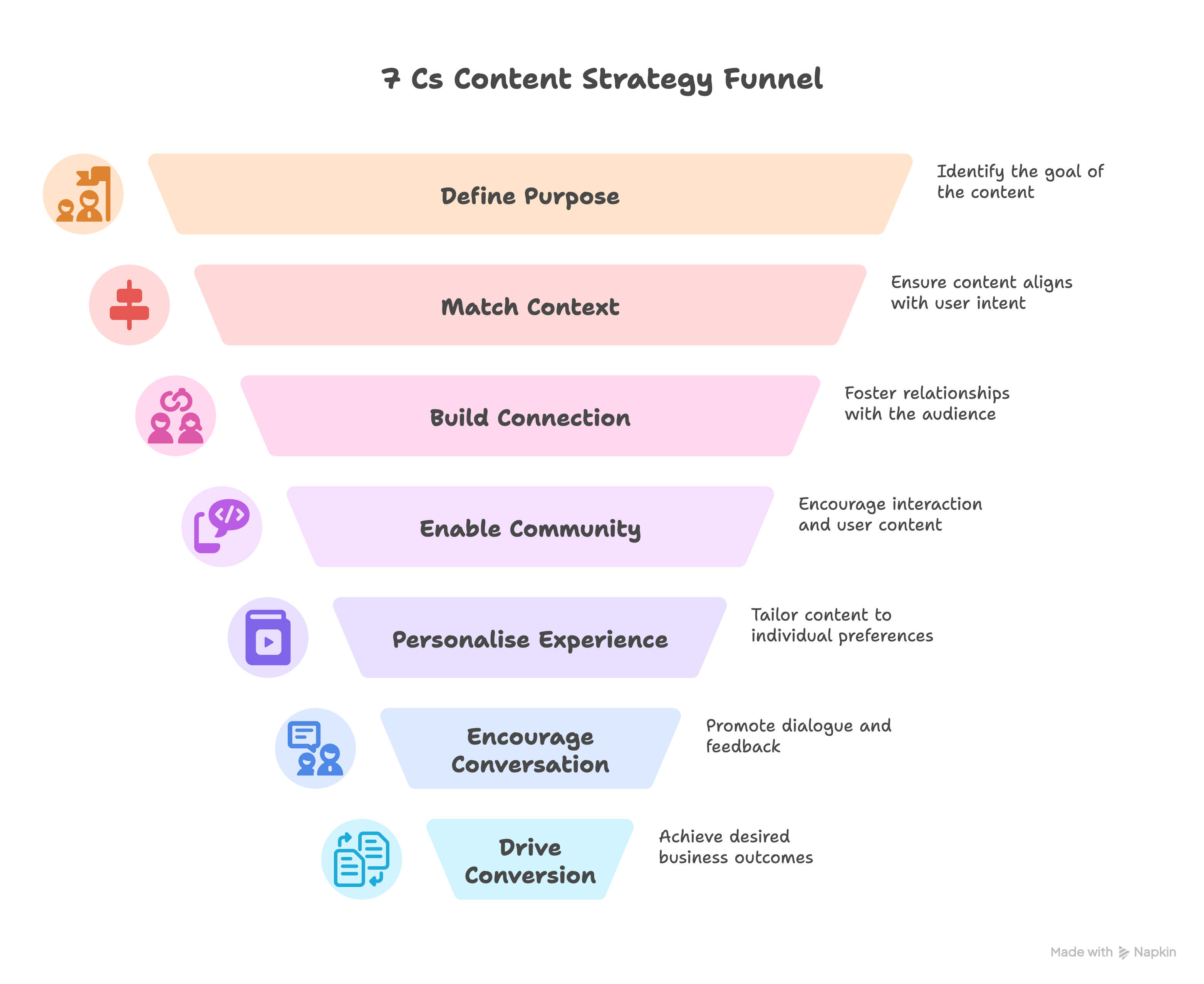
The framework transforms digital marketing from a series of disconnected campaigns into an integrated ecosystem where content, context, connection, community, customisation, conversation and conversion work together. Ready to see why this matters for your bottom line?
The 7 Cs of Digital Marketing Explained
Content: Creating Value-Driven Messages
Content isn’t king anymore – value is. The most successful brands have figured out that pumping out blog posts and social updates isn’t enough. Your content needs to solve problems, answer questions or entertain in ways that make your audience’s life genuinely better.
Modern content creation best practices demand more than keyword stuffing and clickbait headlines. You need to understand what keeps your audience awake at 3 AM and craft messages that address those specific pain points. The brands winning at content marketing create resources their audience would actually pay for – then give them away for free. That’s the bar now.
Here’s what value-driven content actually looks like in practice:
- Educational guides that save hours of research
- Tools and calculators that solve immediate problems
- Entertainment that makes mundane topics engaging
- Insights that challenge conventional thinking
Context: Right Message at the Right Time
Salesforce research shows that delivering the right message at the right time significantly improves marketing email performance, boosting open rates and customer engagement. But context goes beyond just timing – it’s about understanding where your customer is in their journey and what they need at that exact moment.
Think about it. A first-time visitor needs different information than someone who’s been researching your product for weeks. Mayple found that successful digital marketing strategies align messaging timing with each stage of the customer journey, ensuring content matches user intent at every touchpoint.
The rise of AI and analytics has made context-aware communication more achievable. Deloitte Digital notes that brands can now interpret contextual data to shift from mass marketing to timely, individualised messaging. Its basically about being helpful rather than pushy.
“Data-driven timing – leveraging when audiences are most likely to check their inbox – makes communication feel more personal and less intrusive.”
Connection: Building Digital Relationships
Building digital relationships requires the same ingredients as real-world friendships: transparency, consistency and genuine interest. Zero Gravity Marketing emphasises that strong digital relationships start with clear communication and regular, proactive updates that make clients feel valued.
The most frustrating part about digital connection? Brands still treat it like a numbers game. More followers, more likes, more engagement metrics. But Digital Marketing Institute research shows consumers increasingly expect genuine and tailored interactions – not generic responses from a social media intern following a script.
What actually builds connection:
- Responding to comments with actual thought, not templates
- Remembering customer preferences and past interactions
- Following up after purchases to ensure satisfaction
- Admitting mistakes when things go wrong
Sendoso discovered that thoughtful engagement acts – like personalised gifting or direct mail – help brands stand out and foster stronger emotional connections. Sometimes the old-school approach cuts through digital noise better than another email.
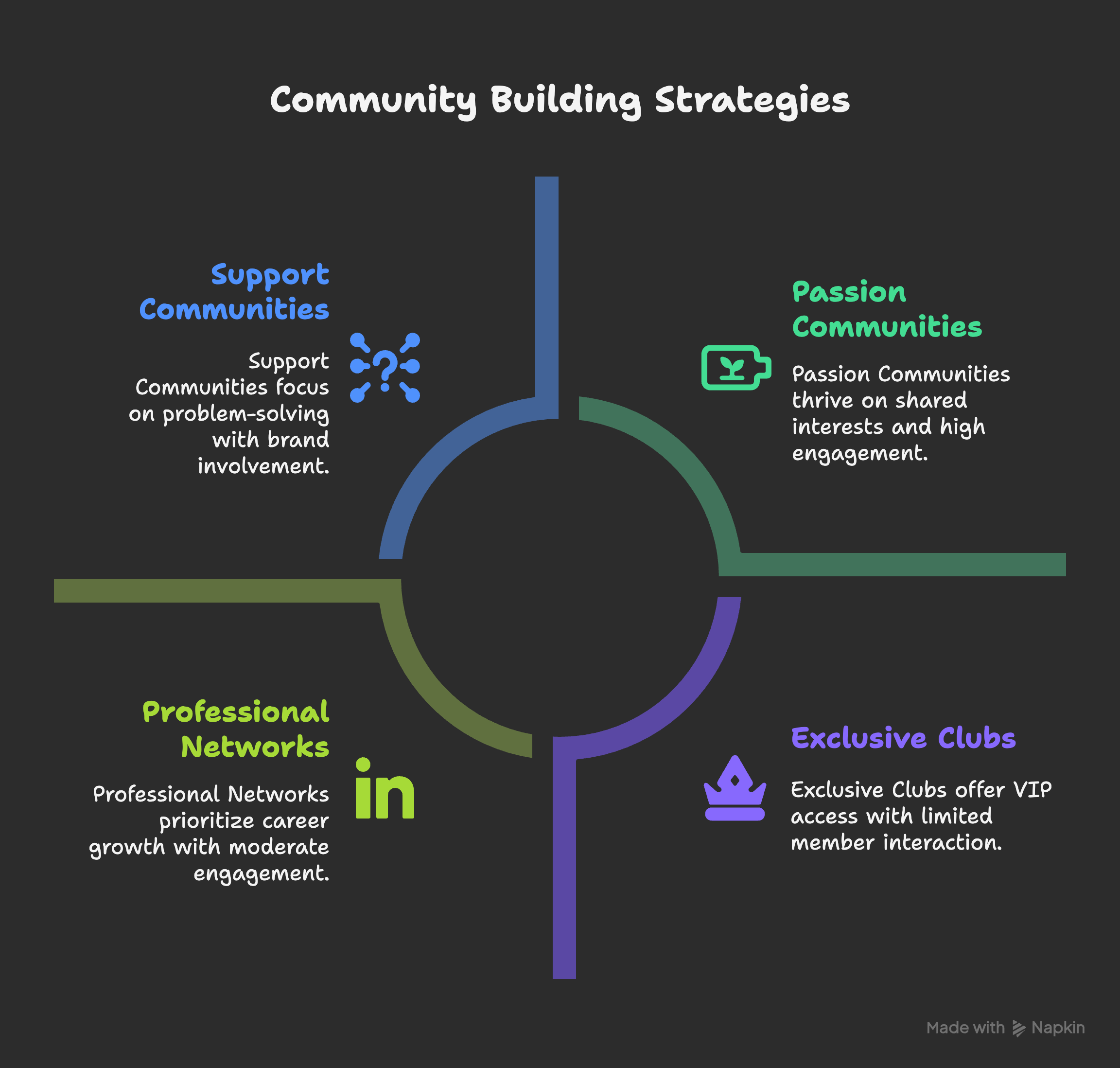
Community: Fostering Brand Advocates
Customisation: Personalising User Experiences
Personalisation has moved from ‘nice to have’ to ‘table stakes’ remarkably fast. McKinsey found that 71 percent of consumers now expect personalised experiences from companies. Not hope for. Expect.
The challenge isn’t technology anymore. AI and automation platforms have made sophisticated personalisation accessible to businesses of any size. Emarsys shows how AI-powered platforms can drive omnichannel engagement by delivering customised experiences across multiple touchpoints. The real challenge is doing it without being creepy.
Effective customisation strategies focus on three key areas:
- Behavioural triggers – Responding to what users actually do, not what they say
- Preference learning – Building profiles based on choices over time
- Context awareness – Adapting to device, location and time
Honestly, the only customisation that really matters is the kind that makes the customer’s life easier. Everything else is just showing off your tech stack.
Conversation: Two-Way Communication Channels
Remember when brand communication meant press releases and TV ads? Those days are ancient history. Content Company research shows that two-way marketing – prioritising dialogue over monologue – enables real-time feedback and rapid adaptation to customer needs.
The shift from broadcasting to conversation changes everything about how brands operate. Emarsys found that incorporating personalised touchpoints within two-way channels maximises engagement and makes communications feel conversational, not transactional.
But here’s what drives marketers crazy: two-way communication means you actually have to listen and respond. Not with canned responses. With real answers. Forbes emphasises that this open dialogue model builds trust and accelerates decision-making – but only when it’s genuine.
Effective two-way channels include:
- Live chat with actual humans (or very smart bots)
- Social media monitoring and response
- Community forums and Q&A sessions
- Interactive webinars and live streams
- SMS and messaging app conversations
Conversion: Turning Interest into Action
| Aspect | Description | Benefit |
|---|---|---|
| Conversion | Turning visitor interest into actions (purchases, sign-ups, downloads) | Measures marketing effectiveness |
| Key Principle | Remove friction; align offer with user intent | Boosts conversion rates without manipulation |
| Optimisation Tactics | A/B testing of headlines, CTAs, forms | Improves results through ongoing refinement |
| AI Smart Traffic | Matches visitor to best landing page variation | More actions from same traffic |
| Incremental Gains | Even small improvements (e.g., 2%) matter | Can double profit margin |
“Effective conversion strategies prioritise clear value propositions, frictionless experiences, and ongoing optimisation of digital touchpoints.”
Why the 7 Cs Matter for Your Digital Marketing Strategies
Customer-Centric Marketing Through the 7 Cs
The 7 Cs framework puts customer needs first, not the product.
- Customer-centric focus: Start with what customers want, not what you want to sell.
- Building loyalty: Tailor experiences to increase engagement and loyalty.
- Dinner party analogy: Customer-centric marketing asks guests for preferences, then crafts the menu; product-centric picks the menu first.
- Technology as enabler: AI and automation personalise interactions to meet rising expectations.
- Organisational change: Real shift comes when businesses redesign marketing around customer needs.
- Connect every touchpoint: Ensure each interaction, from first contact to post-conversion support, enhances user experience and loyalty.
- Integrate initiatives: Avoid treating touchpoints as separate; align them for a seamless, customer-centric ecosystem.
- Promote brand loyalty: Consistent integration across the journey builds stronger connections with users.
Conversion Rate Optimisation Using the Framework
The 7 Cs framework transforms conversion rate optimisation from isolated testing into holistic improvement. LinkedIn explains how applying the full framework ensures alignment between messaging, personalisation, relationship-building and actionable engagement.
Let me paint you a picture of what this looks like. A visitor lands on your site (Content). The message matches their search intent perfectly (Context). They recognise your brand from helpful social media interactions (Connection). Reviews from community members build trust (Community). The page shows products based on their browsing history (Customisation). Live chat answers their specific question (Conversation). The checkout process takes thirty seconds (Conversion).
That’s integration. That’s power.
Unbounce emphasises that CRO best practices now include AI technology like Smart Traffic, which continuously optimises by matching users with personalised landing pages. But the technology only works when supported by strong fundamentals across all seven Cs.
Key optimisation tactics within the framework:
- Content optimisation – Clear value props and benefit-focused copy
- Context matching – Dynamic content based on traffic source
- Trust signals – Community testimonials and social proof
- Personalisation – Customised offers and recommendations
- Frictionless process – Simplified forms and instant responses
Content Marketing Techniques That Drive Results
Mastering the 7 Cs Framework
The 7 Cs of digital marketing represent more than just another framework – they signal a fundamental shift in how successful brands approach customer relationships. While the traditional 4 Ps treated marketing as something you do TO customers, the 7 Cs recognise marketing as something you do WITH them.
The brands crushing it right now aren’t the ones with the biggest budgets or the flashiest campaigns. They’re the ones who’ve figured out how to make these seven elements work together. Content that provides real value. Context that respects customer time. Connections that feel genuine. Communities that thrive independently. Customisation that actually helps. Conversations that lead somewhere. Conversions that feel natural.
Start with one C and get it right. Then add another. The compound effect of integrating all seven creates sustainable competitive advantage that copycat competitors can’t quickly replicate. Because while they’re still broadcasting messages, you’re building relationships.
FAQs
Which C is most important in digital marketing?
Asking which C matters most is like asking which wheel on your car is most important. Remove any one and the whole system breaks down. But if you're just starting? Begin with Content and Conversion. Without valuable content, you have nothing to offer. Without conversion, you have no business. Once those work, layer in the other Cs to amplify results.
How do the 7 Cs differ from the traditional 4 Ps of marketing?
The 4 Ps (Product, Price, Place, Promotion) assume brands control the conversation and customers passively receive messages. The 7 Cs recognise that digital customers actively participate in brand relationships. They research, compare, share experiences and influence others. The shift from P to C represents the shift from company-centric to customer-centric thinking.
Can small businesses apply all 7 Cs effectively?
Small businesses actually have advantages in implementing the 7 Cs. They can build more authentic connections, foster tighter communities and have more meaningful conversations than corporate giants. The key is focus. Pick your battles. A small business that masters community and conversation can outperform a large company that does all seven Cs poorly. Start where you have natural strengths and expand strategically.


